
What if I told you that what you see in a handloom silk saree store in Bengaluru is actually the grandmother of modern computing?
This blog by connects the dots—literally—from the punched cards of a Jacquard loom to binary logic, algorithmic design, and the birth of programmable machines.



27 March 2025 | RMKV, Orion Mall, Bangalore
Today I stumbled upon a time machine in a saree shop.
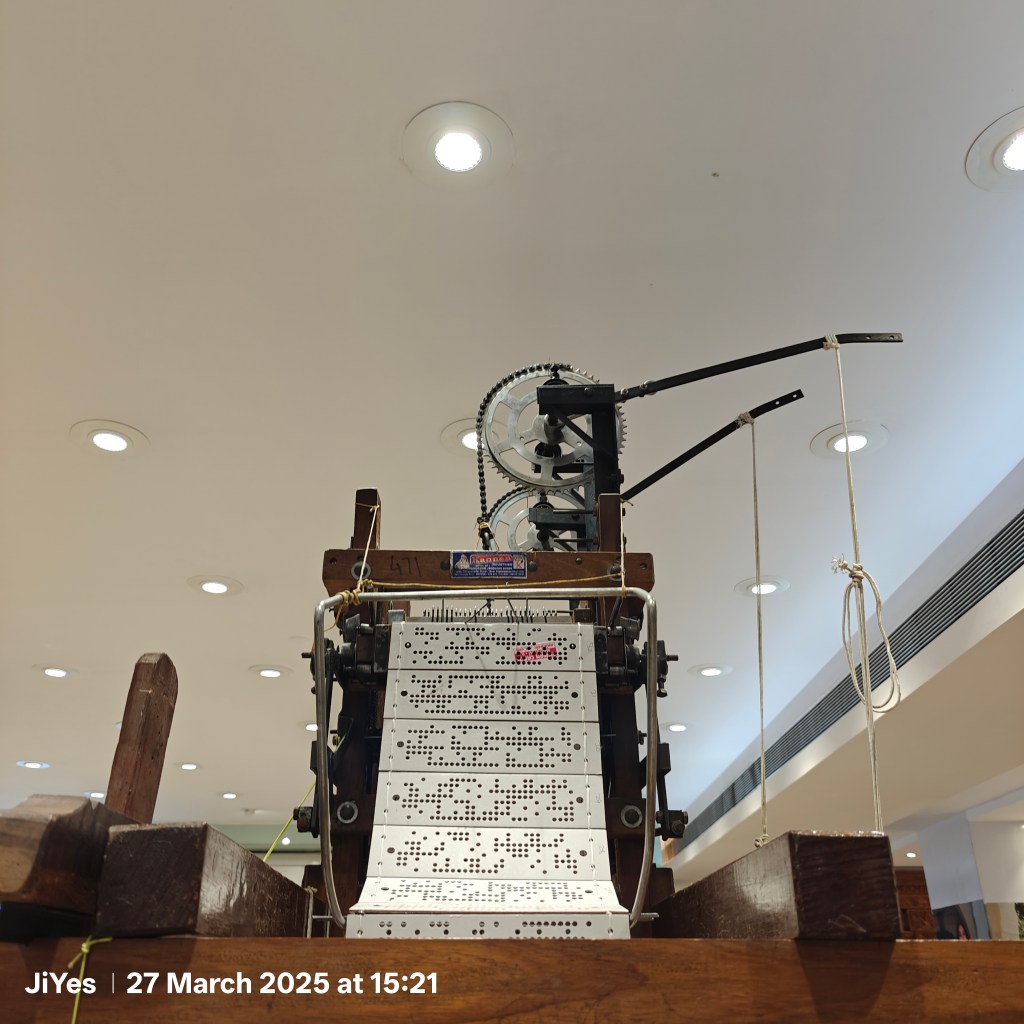
Not a metaphor. A literal, mechanical precursor to the logic gates and programming paradigms that we digital scientists romanticize daily. The Jacquard Loom—a stunning intersection of textile artistry and computational theory—stood humbly in RMKV Bangalore, weaving red silk threads while whispering the saga of binary destiny.
Let’s decode this relic of computation.
1. The Loom That Could Think
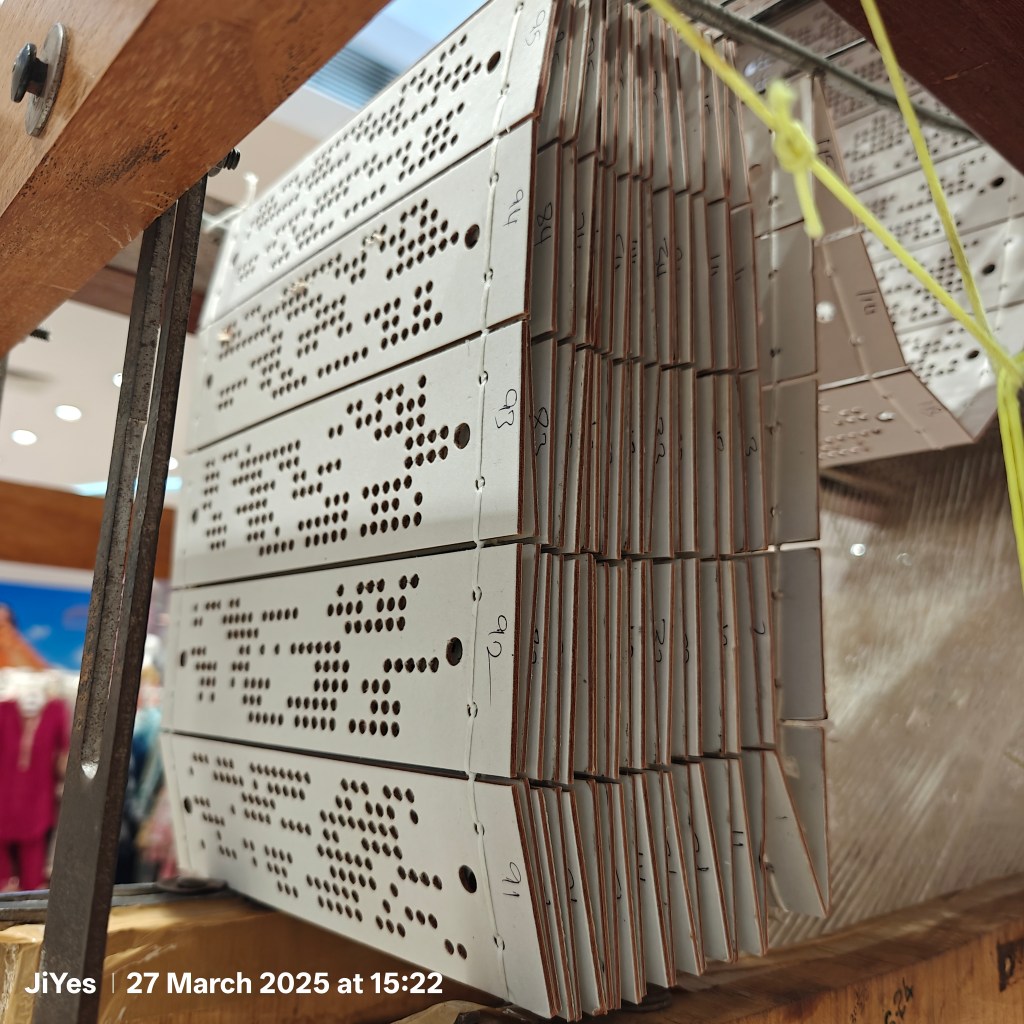
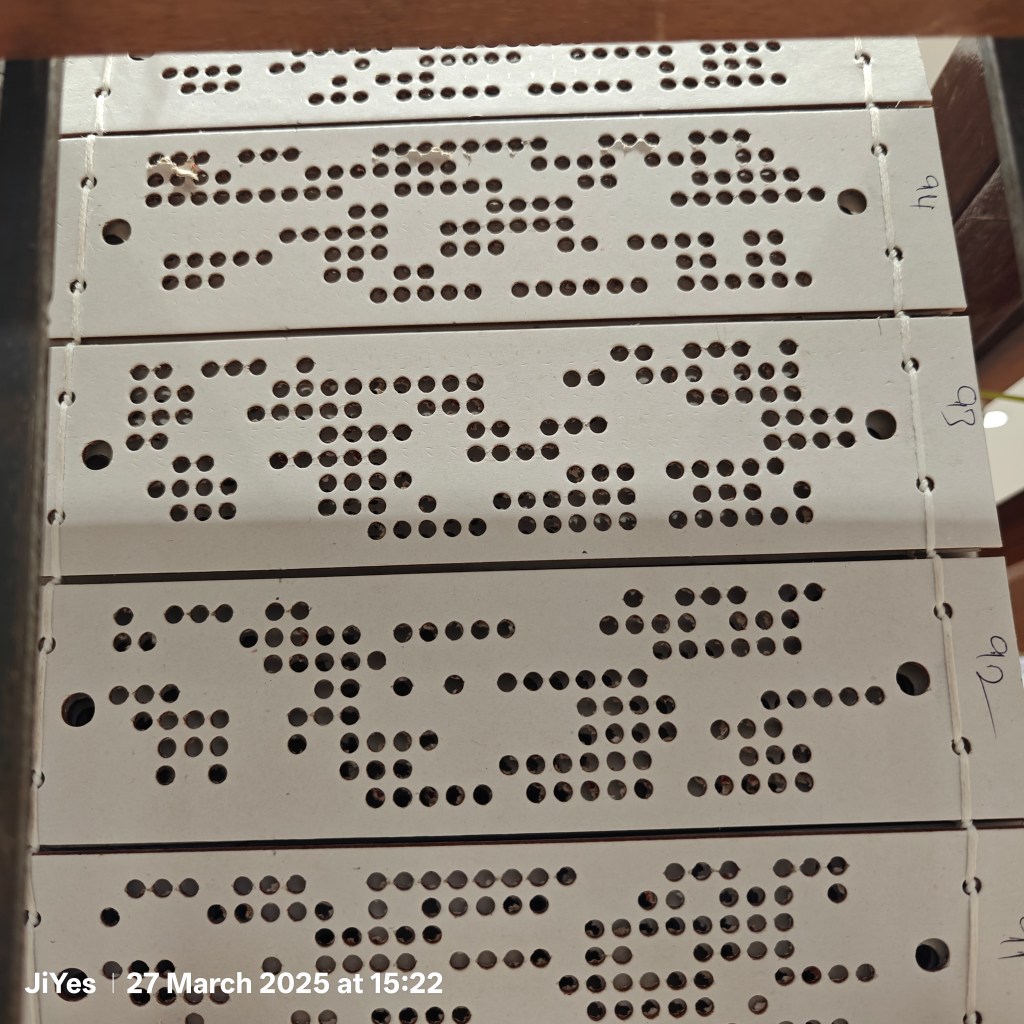
Each of those cards in my photos—punched with patterns—represents binary instructions. Hole = 1. No hole = 0. That’s it. Just like your SSD or RAM chips today.
This is pure combinatorics in motion. Each card selects which threads to raise or lower, determined by the presence or absence of holes. A series of such cards = a program. The loom = an interpreter.
2. Punchcards: Grandparents of Assembly Code
Charles Babbage saw this loom and his Analytical Engine was born. Ada Lovelace—the world’s first programmer—proposed algorithms for it. These looms didn’t just weave fabric; they wove the idea that “machine-executed logic” is possible.
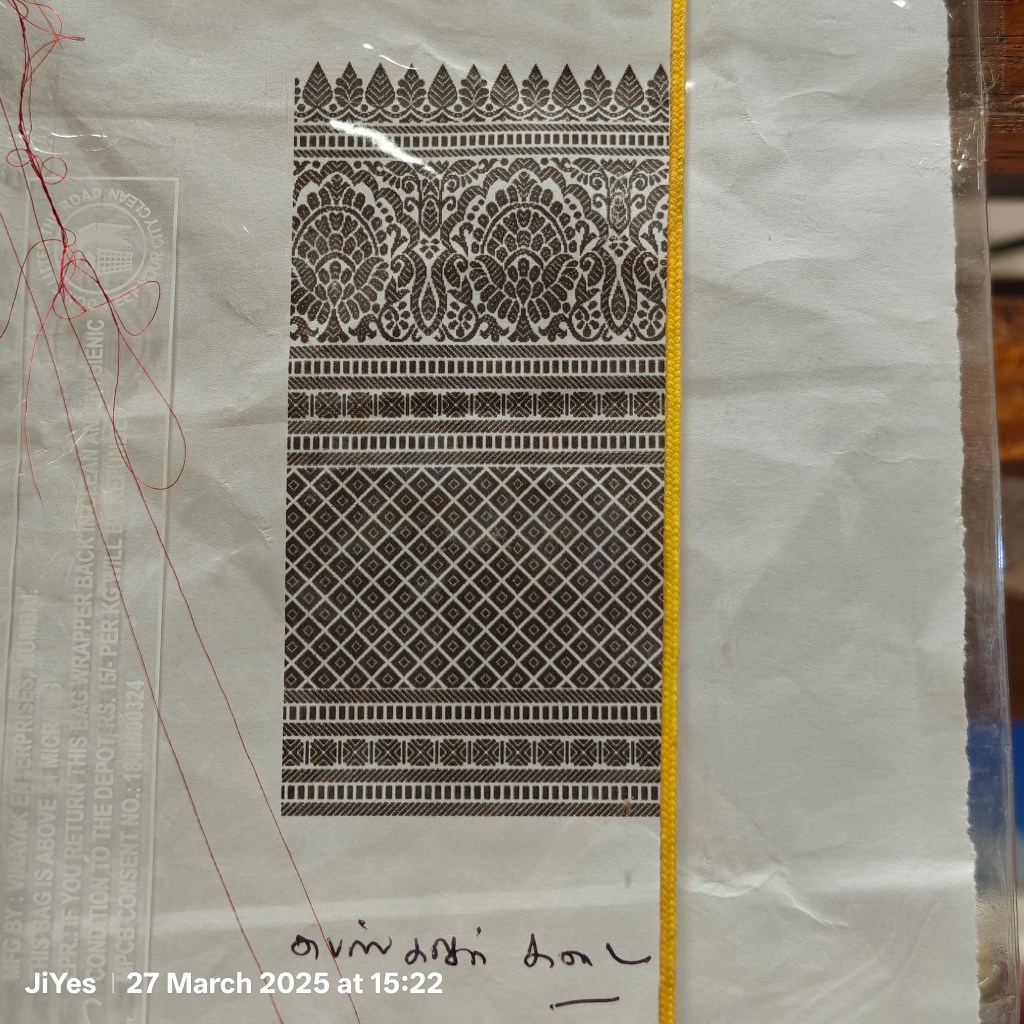
Just imagine: the saree pattern you see? It’s an output. The cards? Input program. The loom? CPU. Threads? Data bus. Warp and weft? Memory addressing.
Even DMA comes alive when the shuttles move without CPU intervention!
3. State Machines in Saree Shops
What you see here is a Finite State Machine at play. At any time, the loom is in a state defined by a card. Input changes (next card), state transitions (next lift/drop of threads), and output (silk pattern) changes.
Classic Mealy Machine. Timeless.
4. Real-Time Systems on the Floor
Notice the looped card stack? That’s your Instruction Pipeline.
Each frame and pulley operates on real-time constraints. Any delay in movement distorts the weave. Jitter? Lost data. Race condition? Broken design. RTOS principles in full swing—no power backup, no OS crash—just mechanical elegance doing priority scheduling in physical space.
5. What’s the Algorithm of Beauty?
The punchcard numbering in my photos—91 to 116—defines a repeated motif. The saree pattern is periodic, built on modular arithmetic.
There’s harmony in how motifs loop after a cycle, just like hashing or LCM operations in number theory. Modular maths in cultural expression—what a riot!
6. Final Thought: Weaving as Computation
Claude Shannon once said, “Information is the resolution of uncertainty.” These looms resolved aesthetic uncertainty, card by card.
Next time someone asks where Computer Science began, don’t say Bell Labs. Say: “In the heart of a loom, in the rhythm of silk, at a saree shop in Bangalore.”
 MindsWideOpen.In - AI ⚡ AI 🚀
Leave a comment