
Introduction:
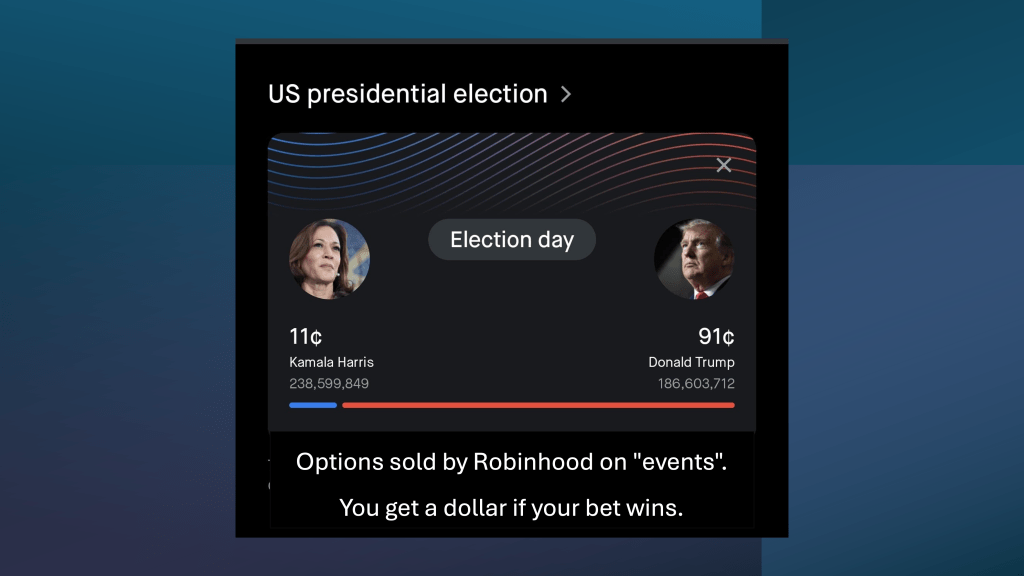
Imagine this: you’re sitting with a friend, placing a bet on the U.S. presidential election. The betting market says there’s a 91% chance for Trump and just 11% for Harris. Seems pretty clear, right? But wait – those numbers are based on probability, not certainty. Just because Trump’s odds look high, doesn’t mean it’s a done deal.
This brings me to a story by Yakov Perelman, a Russian mathematician, who used to tell a tale about a confident bet that went wrong. So let’s look at what his story teaches us about betting, math, and why even the “surest” bets aren’t so sure.
Perelman’s Story: Betting the Bicycle
In Perelman’s story, a young mathematician bets his bicycle on what seemed like a “can’t-lose” situation. He and his friends were watching people pass by a window. He confidently bets that the next hundred people walking by will not all be men – because, well, what are the odds of that? In his mind, it’s close to impossible.

Just as he makes the bet, the sound of a marching band appears in the distance. To his shock, a group of soldiers – all men – marches by, one after another. He loses his bet, and his bicycle. The lesson? Probability may tell you what’s likely, but life has a way of throwing curveballs when you least expect it.
The U.S. Election: Odds on Trump and Harris
Now, back to today. Betting markets have Trump at 91% and Harris at only 11%. If you look at those odds, it’s tempting to think Trump’s a sure thing, just like the young mathematician thought he’d never see 100 men walk by in a row. But just because something is likely doesn’t mean it’s certain. Harris may have low odds, but she still has a chance. Probability is tricky like that.
How Probability Works (Simple Version!)
Think of probability as the chance of something happening. A high probability means it’s likely, and a low probability means it’s unlikely – but “unlikely” isn’t “impossible.” In Perelman’s story, the chance of 100 men walking by was incredibly low, yet it happened anyway. So while Trump’s chances look good at 91%, it’s not a guarantee. That 11% for Harris means there’s still a sliver of possibility she could win, even if it’s unlikely.
The Fun of Betting Against the Odds
For some people, there’s a thrill in betting on the underdog, like Harris in this case. It’s like saying, “I know the odds are low, but what if?” Betting on a long shot is a little risky but can be fun because if it actually happens, the payoff (and the satisfaction) is huge. It’s similar to Perelman’s story: the bet seemed like a no-brainer, but the reality was surprising and unforgettable.
Lesson: Life Isn’t Always What the Numbers Say
If there’s one thing Perelman’s story and election betting can teach us, it’s that real life doesn’t always play by the rules of probability. No matter how high the odds are, surprises happen. Betting on elections is a bit like placing a bet in Perelman’s story – even when things seem predictable, you never know what’s coming around the corner.
Conclusion
So, as you watch the election results, remember that probabilities are just guides. They tell us what’s likely, not what’s certain. Betting on Trump might feel safe, and betting on Harris might feel bold. But in the end, like Perelman’s marching band, reality has a way of surprising us all.

 MindsWideOpen.In - AI ⚡ AI 🚀
Leave a comment